Our Circle of Life
In the early 2000’s, Suzanne Richard was an active actress and director in the DMV region, looking for opportunities to direct and perform accessible theatrical work. In 2003 opportunity presented itself when Elsayed Mansour said that Suzanne and Dan Via could use the back room of his bar, the 1409 Playbill Café, which is sadly gone now.
So Richard and Via presented Christopher Durang’s Laughing Wild, which they described as a professional, integrated production because Richard was disabled; Via was not.
At that time, people with disabilities started coming to the show and asking whether it was true. Was this really a professional theatre opportunity where disabled artists could work alongside non-disabled artists? While initially, it hadn’t really been the plan. It became clear there was a need. Suzanne and Arianna Ross, an expert in story telling, co-founded Open Circle Theatre using this premise.
Thus Open Circle Theatre began.
That first production established an idea that would remain central to Open Circle: disabled artists belonged in professional theatre, and disability is part of the artistry onstage.
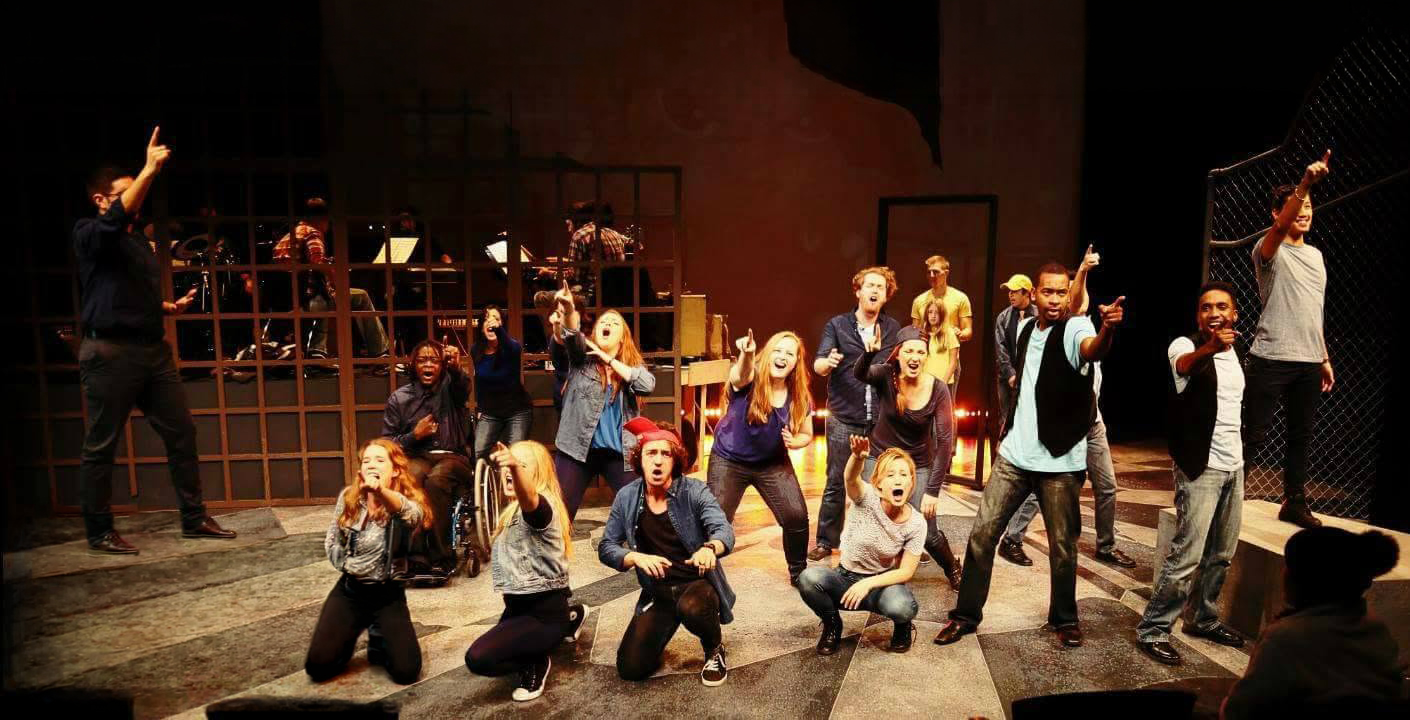
For its second production, Open Circle made a fairly audacious jump from a two-person show to a large-scale rock musical Jesus Christ Superstar. The production marked the beginning of an important artistic collaboration with Monique Holt as Sign Master, the title then used for the role that would evolve into Director of Artistic Sign Language, or DASL. American Sign Language was integrated into the production itself, while Fred Michael Beam and Stefan Sittig created movement for an integrated company of disabled and non-disabled performers.
This production led to four Helen Hayes Award nominations:
- Outstanding Resident Musical — Jesus Christ Superstar
- Outstanding Director, Resident Musical — Suzanne Richard
- Outstanding Lead Actor, Resident Musical — Rob McQuay
- Outstanding Supporting Actor, Resident Musical — Rick Foucheux
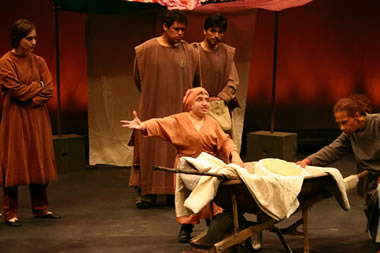
In 2005, The Caucasian Chalk Circle marked another important element that became central to Open Circle Theatre: fully integrated audio description on demand.
Access was not reserved for a designated performance. It was part of making the show.
Partnerships are integral to Open Circle Theatre’s community accessibility and possibility. Through the next 2 decades partners included Liz Lerman Dance Exchange, VSA arts Start with the Arts Family Festival, Capital Fringe Festival, Woolly Mammoth Theatre Company, Story Tapestries, and more.
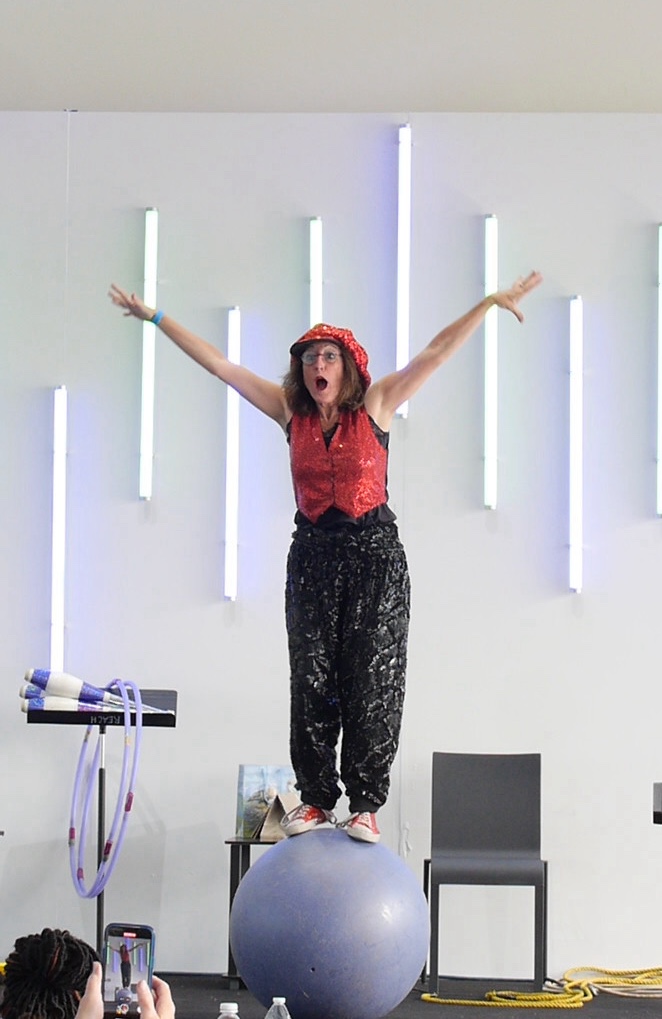
Alongside its productions, Open Circle brought its experience into schools through a long-running collaboration with Story Tapestries, using Arts Integration and professional development to help educators build a culture of inclusion within their schools. The work brings artists and educators together to consider access, disability, creativity, and participation as part of how a classroom and school community function from the beginning.
That work also extends beyond the educational system. Open Circle consults with theatres, arts organizations, businesses, community groups, and other institutions on creating a culture of inclusion within their own spaces, not simply making a space technically accessible, but examining who is welcomed, who participates, who has agency, and how disability is understood throughout an organization.
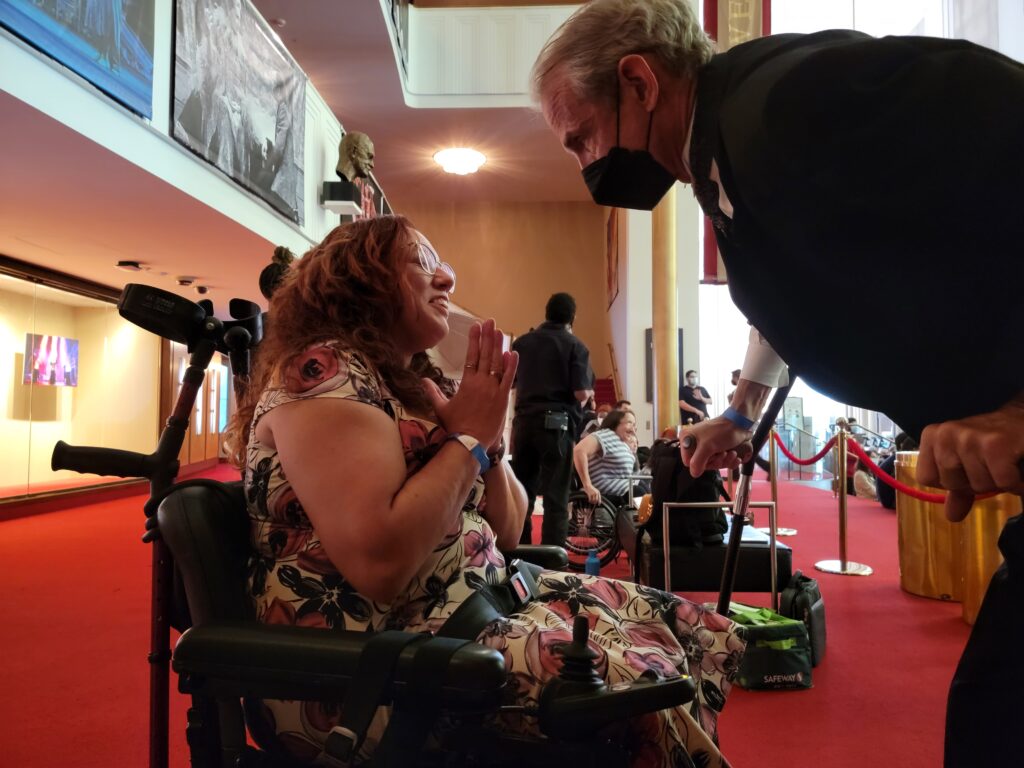
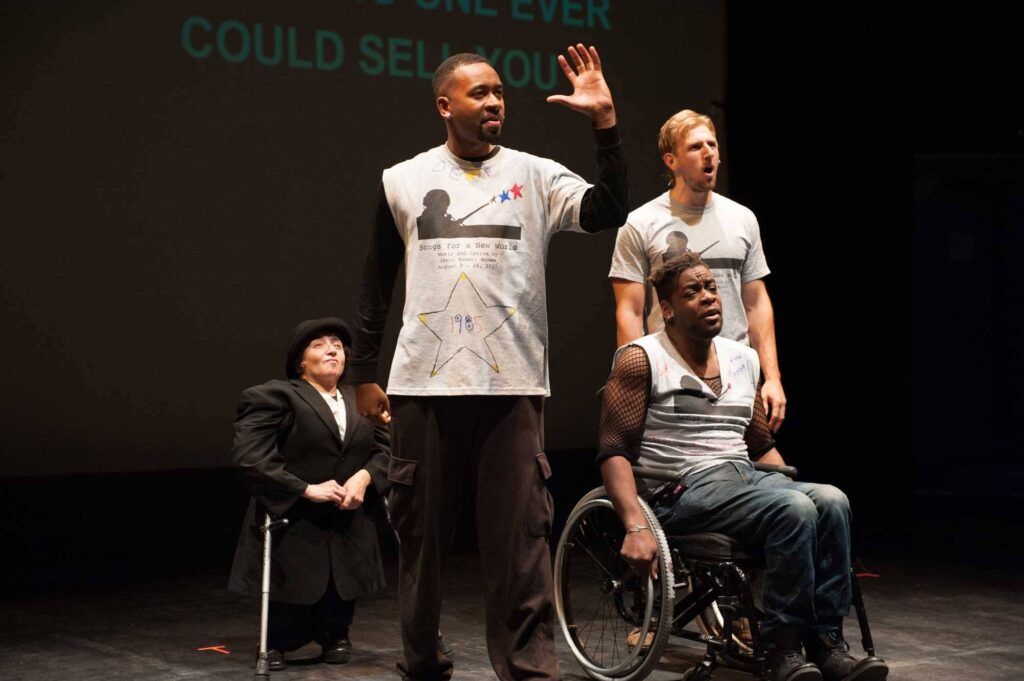
In 2022, Open Circle expanded its focus beyond individual productions with the Open Doors Festival at the Kennedy Center.
Open Doors brought together disabled and d/Deaf performers, playwrights, dancers, musicians, visual artists, teachers, advocates, and audiences for performances, an arts market, classes, panels, and a Millennium Stage performance.
Something important came out of that gathering: artists wanted to stay connected.
The Open Circle Hive grew from that community, becoming a space exclusively for disabled and d/Deaf artists to share opportunities, create together, talk honestly, and simply be together.
Open Doors returned in 2024 as a two-day event spanning the Kennedy Center’s Millennium Stage and Woolly Mammoth Theatre Company, presented with Story Tapestries, Extreme Lengths Productions, Georgetown University’s Disability Cultural Center, and Woolly Mammoth.
The circle continued to grow.
Open Circle’s next question grew naturally out of everything that came before it:
What about the disabled artist or audience member who cannot physically come into the theatre at all?
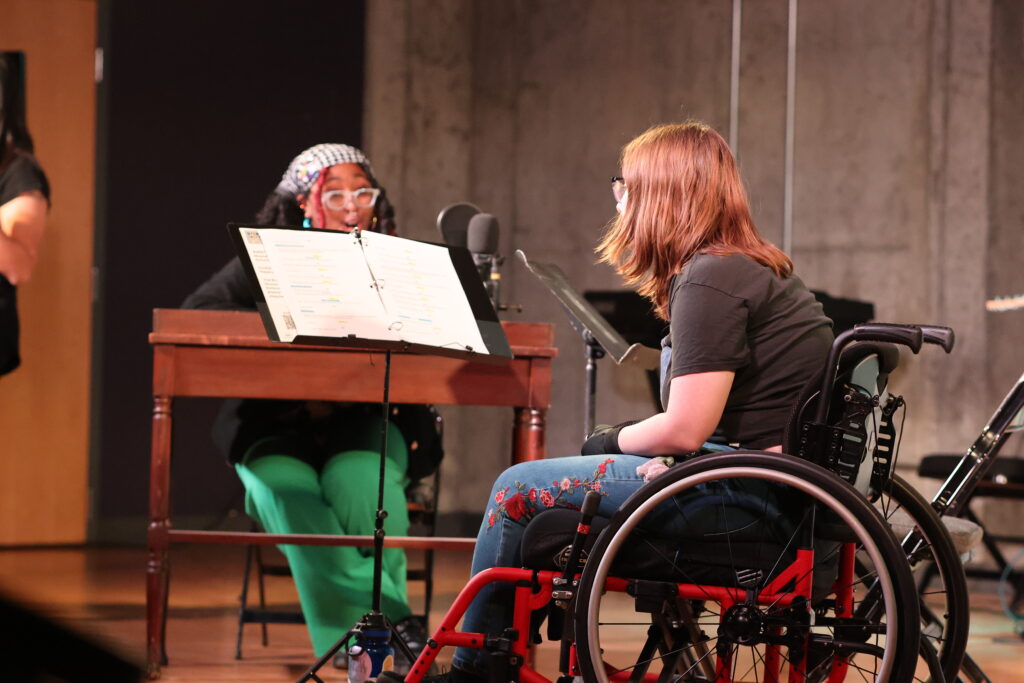
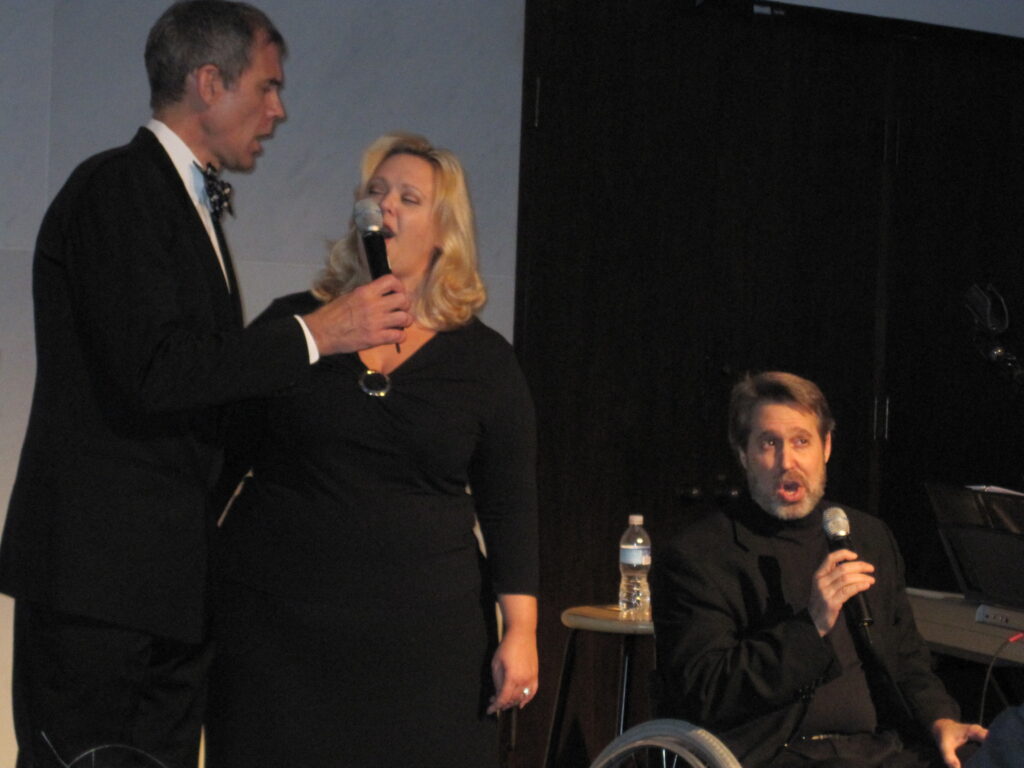
In 2024, Open Circle Theatre and playwright/composer Lisa Sniderman took The Grieving Project into a residency at The Voxel in Baltimore to create a proof of concept for a truly hybrid theatrical experience.
Sniderman participated remotely through a telepresence robot while the team experimented with ways for remote and in-person artists and audiences to inhabit the same theatrical event.
The goal was never simply to livestream a performance to someone watching alone at home.
It was to explore whether a remote audience could watch in community with the audience inside the theatre, sharing the same event, interacting with one another, and having agency and presence within the experience even while entering from different physical spaces.
Through generous funding from the Doris Duke Foundation, Open Circle continues to explore what a truly hybrid accessible theatrical experience can be.
More than twenty years after Elsayed Mansour offered the back room of the 1409 Playbill Café for free, the journey keeps going, from productions, to classrooms, to community, to digital spaces, Open Circle Theatre is always asking who is still outside the circle and creating opportunities for them to join.
The Mission
Open Circle Theatre is a professional theatre company dedicated to advancing careers in the arts for people with disabilities through professional integrated performances, educational programming, and inclusive community events. OCT advances the idea that disability can enhance the artistic experience, inspire aesthetic innovation, and influence a community to become accessible for all. Through the arts, a community can be brought together to celebrate all abilities and embrace similarities rather than differences, while still elevating the unique contributions and culture made by people with disabilities.
Our Vision
Open Circle Theatre produces high-quality, inventive theatre productions that provide opportunities for professional theatre artists with and without disabilities. Consequently, a space is established in the DC metro theatre community that:
- Exposes the work of artists and arts administrators with disabilities in an integrated setting and celebrates the innovative artistic aesthetic that can be generated by embracing these theatre professionals
- Creates an environment that is accessible to all — from the most mainstream theatre goer to those with auditory, visual or intellectual disabilities — and strives to provide an equivalent experience for every member of a diverse audience
- Uses the performing arts to make education and learning inclusive for all students and all types of learners
- Mentors the development of professional artists with disabilities